Why So Many Pet Weight-Loss Attempts Fail, and What Actually Helps
Published
Based on the Association for Pet Obesity Prevention's 2025 Pet Obesity and Nutrition Opinion Survey (published March 2026) and a 2026 peer-reviewed veterinary review of overweight and obesity management, cross-checked against WSAVA global nutrition guidance.
A 2026 survey found that only about one in four dog owners and fewer than one in five cat owners who tried to help an overweight pet lose weight actually got there and kept it off. The reasons have less to do with willpower than most owners assume.
The perception gap
Most owners who try to get weight off a dog or cat believe they are doing it right. A new survey suggests most of them are not seeing it work anyway, and the reasons have less to do with willpower than people assume.
The Association for Pet Obesity Prevention, a veterinary nonprofit that has tracked feeding habits and body condition for over a decade, published its 2025 Pet Obesity and Nutrition Opinion Survey in March 2026. It drew on responses from 174 pet owners and 84 veterinary professionals across 45 states. The headline number is blunt: among owners who said they had tried to help an overweight pet lose weight, only about one in four dog owners and fewer than one in five cat owners reported that the pet actually reached a healthy body condition and stayed there.
That is a low success rate for something that sounds, on paper, like simple math. Feed fewer calories than the pet burns, and weight should come off. The survey points at why that math rarely plays out cleanly in a real house with a real pet begging at the counter.
The measuring problem
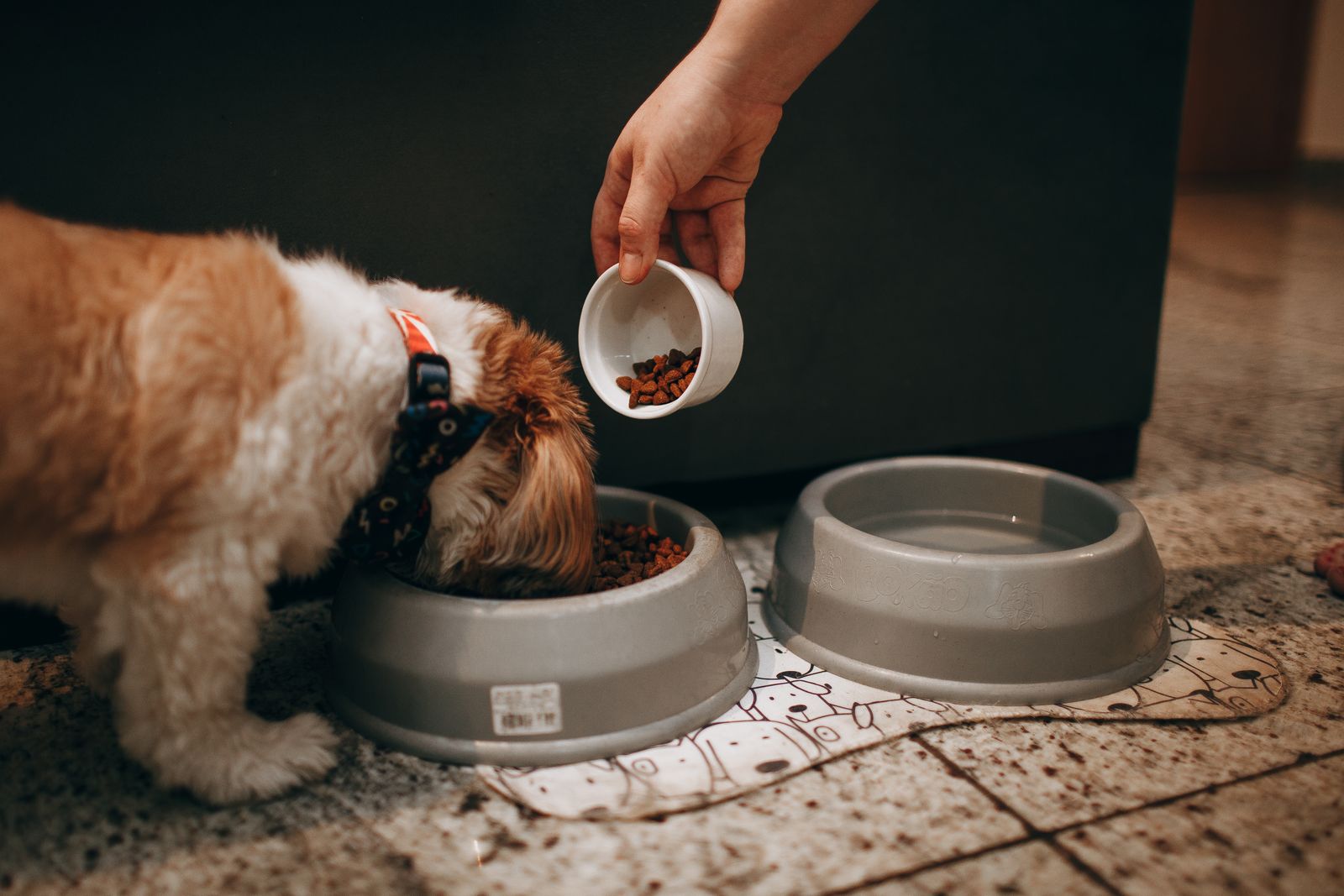
Start with the most basic step in any weight-loss plan: knowing how much food is actually going into the bowl. The survey found that only 3 percent of cat owners and 16 percent of dog owners reported weighing their pet's food. Nearly everyone else is scooping, eyeballing, or pouring by habit.
A scoop is a poor stand-in for a scale. Kibble shape and density vary between brands and even between bags of the same brand, so a level scoop of one food can carry a meaningfully different calorie load than a level scoop of another. When a vet sets a calorie target for weight loss, that target assumes some accuracy in how the food gets measured. If the actual portion drifts ten or twenty percent high because of a generous scoop, the "diet" the pet is supposedly on was never really the diet on paper. The owner is following a plan that only exists in the vet's notes.
This is not a minor technicality. A weight-loss plan built on volume measurement can fail for reasons that have nothing to do with the pet's biology or the owner's discipline. The plan itself was never precise enough to work.
Therapeutic diets are the exception, not the rule
The survey also asked how many owners had used a therapeutic weight-loss diet, meaning a food specifically formulated to support fat loss while preserving lean muscle and keeping the pet satisfied on fewer calories. Only 22 percent of dog owners and 35 percent of cat owners had used one.
Most weight-loss attempts, in other words, involve feeding less of the pet's regular food rather than switching to a diet built for the job. That approach can work for pets with only a little to lose, but it gets harder as the calorie cut grows. A 2026 veterinary review of overweight and obesity management in dogs and cats explains why: when a weight-loss plan simply reduces the volume of a regular maintenance diet, "the proportionate drop in macro and micronutrients may fall below minimum requirements for some nutrients, including protein." Purpose-formulated weight management diets are built to avoid that gap, holding protein steady while cutting fat and adding fiber to help the pet feel satisfied on fewer calories.
There is also a plainer reason therapeutic diets are not the default: they usually require a veterinary recommendation, a different bag of food than what the household already buys, and sometimes a higher price. Every one of those steps is a place a plan can quietly stall.
Money is part of the picture
Forty percent of pet owners in the survey reported that current economic conditions are affecting how they manage their pet's health. It is hard to read that figure without thinking back to the therapeutic-diet numbers. A specialty weight-loss food often costs more per bag than a standard maintenance diet, and a household watching its budget may reasonably choose the food it already knows over a vet-recommended switch, even after being told the switch would help.
This is not really about owners who do not care. Most do. It is about the gap between what clinical guidance recommends and what a given month's budget allows, and that gap rarely comes up when people ask why a pet did not lose weight.
Vets are not always saying it plainly
The survey also looked at the clinical side. Ninety-five percent of veterinary professionals in the survey said they recognize obesity as a disease rather than a lifestyle quirk. But 87 percent also reported at least one instance where concern about how a client would react shaped how they approached the weight conversation. Body condition scoring, the hands-on check that catches early weight gain before it becomes obvious, gets done at 70 percent of wellness exams but only 21 percent of other visit types.
Dr. Ernie Ward, the veterinarian who founded APOP, put it this way in the survey release: "Pet obesity is a disease, not a discipline issue." He also described what he called a self-reinforcing perception gap, where owners who do not think their pet has a weight problem are less likely to hear or absorb a vet's concern about it, and vets who anticipate that reaction sometimes soften how directly they raise it. Neither side is being careless. The two patterns just tend to reinforce each other over a series of short appointments where weight is one topic among many.
What tends to work instead
None of this means weight loss in pets is hopeless, only that the version most households attempt on their own is missing a few pieces that veterinary guidance treats as standard. The survey's most useful finding may be the quiet one: the households whose pets actually reached a healthy weight were not necessarily the ones trying hardest. They were the ones whose plan matched what the guidelines actually call for.
None of it requires expensive equipment or a dramatic overhaul either. A kitchen scale costs less than a bag of premium kibble. What the plan mostly requires is treating weight loss as something to measure and revisit rather than a one-time instruction to feed less. In practice that usually includes:
- A calorie target set from the pet's current weight, target weight, and life stage, not a generic feeding-chart number
- Food measured in grams on a kitchen scale, not scooped by volume
- A therapeutic weight-loss diet when the calorie cut is more than modest, so the pet keeps enough protein and still feels reasonably full
- Regular reweighing and body condition checks, roughly every two to four weeks as veterinary guidance recommends, so the plan gets adjusted instead of running on autopilot
- Treats and extras counted as part of the daily total rather than added on top of it